01 / Pick a starting window
Start with the trip you want to take.
For a first trip linking Beijing and Shanghai, our starting shortlist is April–May or September–October. Then remove dates that clash with public holidays, your budget or the activity you most want to do. These are planning windows, not promises about the weather.
Long days outside?
Prioritize walking comfort. A Great Wall day and a museum afternoon put very different demands on your itinerary. Give the outdoor highlight a backup day.
Dates already fixed?
Change the pace before adding another city: one substantial outdoor visit, a proper break, and an optional evening is more flexible than three timed sights.
The useful question is not just “Which month?” It is “Will my most important day still work if it is hot, wet or cold?” Use the seasonal comparison below for a Beijing–Shanghai route, then check the regional differences.
02 / Compare the trade-offs
Four seasons. Four different ways to travel.
Choose a season to see how we would pace a Beijing–Shanghai city trip. The route suggestions are editorial judgments; the climate descriptions come from the two cities’ official overviews.
March–May · variable temperatures
More time on foot, with a rain plan.
Compare April and May if you want a city route with parks, neighborhood walks and outdoor sights. Do not treat early March as the same weather window as late May.
- Build the day around
- One long outdoor visit, with a museum or indoor neighborhood stop you can swap in if conditions turn.
- Pack for
- Layers and rain protection. Shanghai’s spring includes frequent drizzle; Beijing’s spring is short.
- Before you choose a week
- Check Qingming and Labor Day arrangements for your travel year before committing to hotel and train bookings.
June–August · heat and rain
Protect the middle of the day.
Summer can still suit fixed school or work holidays. Our approach is fewer transfers and shorter outdoor blocks, rather than a full sightseeing schedule carried over from spring.
- Build the day around
- An early outdoor visit, an indoor lunch or rest break, and an optional evening walk. Confirm opening times before relying on an early start.
- Plan around
- Hot, rainy weather in Beijing; heat, humidity and rain in Shanghai, including its early-summer plum-rain period.
- Keep flexible
- A Great Wall or other exposed outdoor day. Follow local warnings and site instructions rather than trying to preserve a prepaid schedule.
September–November · cooling through the season
A strong city-trip option, with a calendar catch.
Compare September and October for a first city route. Early September, mid-October and late November are different choices: check each city rather than packing for one average.
- Build the day around
- Walking neighborhoods and major outdoor sights, with flexibility for a wet or windy day.
- Watch for
- National Day holiday demand. Shanghai’s official overview also flags late-summer and early-autumn typhoon conditions.
- Do not book on a photo alone
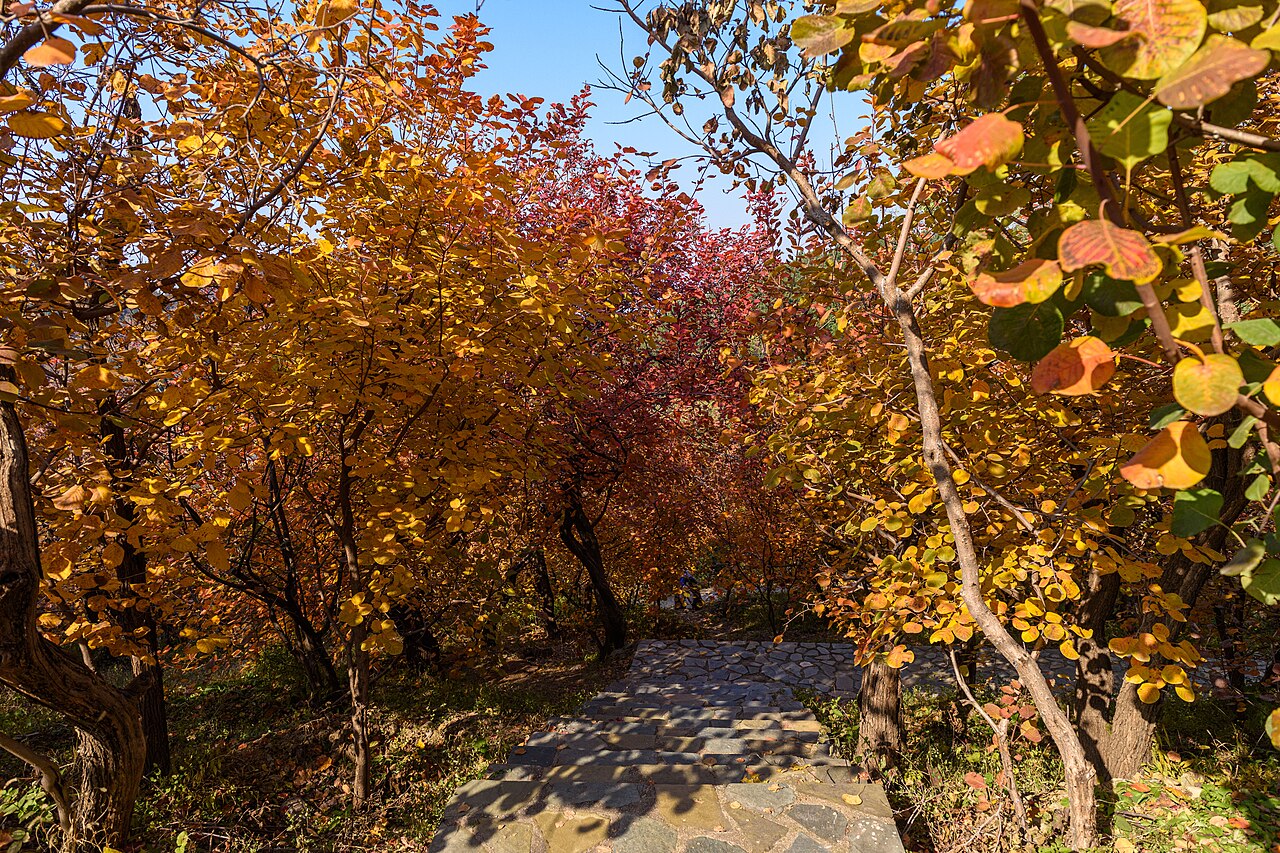
- Foliage and clear skies are not guaranteed for a particular date. Choose a route you will still enjoy without the perfect photograph.
December–February · cold-weather planning
Make the trip comfortable, not just possible.
A winter city trip can focus on museums, meals and shorter walks. Choose it deliberately if you are comfortable adapting outdoor days and carrying suitable clothing.
- Build the day around
- Shorter outdoor blocks and indoor stops close together. Avoid making every day depend on a long exposed walk.
- Pack for
- Beijing’s cold, dry winter and Shanghai’s cold, damp conditions; one city’s forecast will not cover the other.
- Before paying
- Check the Lunar New Year travel period for the actual year, transport availability, and opening arrangements at your essential stops.
Climate basis: Beijing’s official climate description identifies short spring and autumn seasons, hot rainy summers and cold dry winters.
Shanghai’s seasonal overview describes spring drizzle, summer heat and humidity, the plum-rain period and damp winters. Its historic temperatures are not forecasts for your dates.
03 / Change the route, change the answer
Do not give every destination the same month.

Photo: TurnOnTheNight / Wikimedia Commons · 1 November 2025 · CC BY-SA 4.0. Thumbnail, resized for display; same image license applies.
Beijing
+ Great Wall
Deciding factor: how much of your trip is outdoors. Compare the spring and autumn windows above, then leave a second possible day for the Wall.
The city climate is a starting point; check the specific site’s weather and access notices. Plan the Mutianyu day →
Shanghai
+ city walks
Deciding factor: rain and walking comfort. Use spring or autumn as a starting comparison; if traveling in summer, plan shorter outdoor segments and an indoor middle of the day.
Keep the Bund walk movable instead of making it the only worthwhile activity that day. See a three-day Shanghai route →
Kunming
+ Yunnan
Deciding factor: the exact stops. The Yunnan provincial legislature’s city profile describes Kunming’s plateau monsoon climate and moderate seasonal temperatures. That does not describe every destination in Yunnan. Official city profile, in Chinese →
List your overnight stops before choosing clothes or a month. A Kunming city stay and a trip extending into higher mountains need separate checks.
Mountain
+ river scenery
Deciding factor: visibility, current conditions and whether the activity is operating. For places such as Zhangjiajie or the Li River, do not apply Beijing’s seasonal advice by default.
Keep one flexible day, check the destination and operator’s current notices, and decide what replaces the activity if it cannot run. Prepare a Guilin–Yangshuo route →
04 / Check before booking
A good season can still be a difficult week.
Check Lunar New Year, Labor Day around May 1, and National Day around October 1 against the official arrangements for your travel year. The date of a festival and the full public-holiday period are not necessarily the same.
- Can you actually get between the cities on your chosen dates?
- Are your essential attractions open, and can you reserve the required entry?
- Can you change the hotel or outdoor day if the plan needs to move?
Use the official public-holiday calendar, checking the year printed on the page. Do not reuse 2026 arrangements as a 2027 calendar or assume a whole month will be inexpensive.
05 / Turn the choice into a trip
Choose two windows, then compare real bookings.
- Pick the anchor: the city or activity you would be most disappointed to miss.
- Shortlist two date windows: compare holidays, your heat or cold tolerance, and the route between stops.
- Check the actual trip: entry requirements, available transport, opening arrangements and cancellation terms.
- Near departure: use local forecasts to adjust clothing and outdoor days.
For a first visit, start with our seven-day itinerary. For packing, use what to wear in China. You are choosing a workable trip, not a universally perfect month.
Sources & how to use this guide
Official guidance supports the factual statements linked above. Our checklists, examples and route choices are editorial preparation advice, not provider tests or individual guarantees. Review changing requirements again for your travel dates.
- Beijing: climate and geography — Beijing Municipal Government
- Shanghai: climate overview — Shanghai Municipal Government
- Kunming city profile — Yunnan Provincial People’s Congress (city government profile)
- Public holidays — Beijing Municipal Government
Edited and reviewed on 30 October 2026. Read our editorial method.